RÍO CONCHOS: Sierra Tarahumara to the Desert

242 km (150 miles, class III-IV, 10 days (8 on water)

August: rendezvous in Douglas/Cuauhtémoc . RESERVE NOW

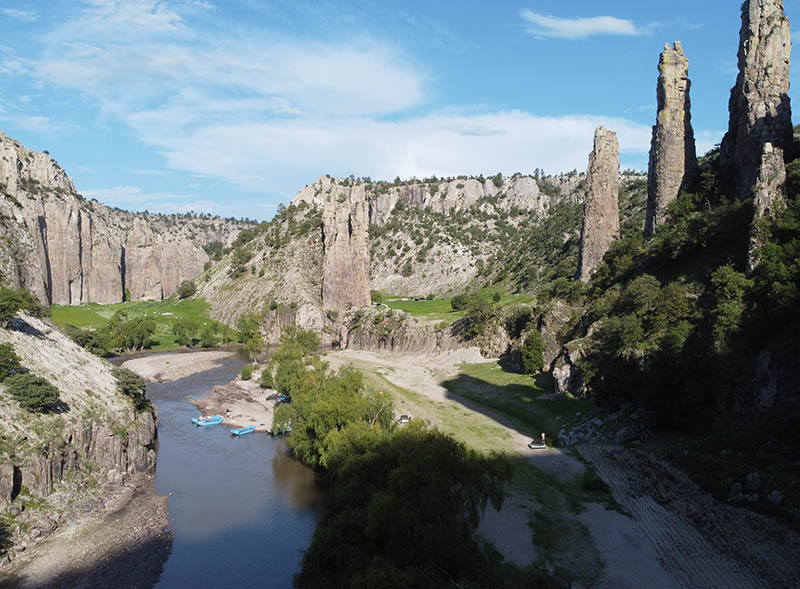
Join an expedition down one of the most scenic rivers in Mexico just south of the New Mexico/Texas border! Enjoy beautiful canyon, interesting caves, fun rapids, and hotsprings in Tarahumara land. Everyone is welcome: kayakers, rafters, and passengers. This is a class III trip suitable for intermediate kayakers.

TRIP INFORMATION
ITINERARY
PRICE & WHAT YOU GET
RESERVATIONS/PAYMENTS
YOUR GUIDES
RENDEZVOUS POINTS
FOOD, ALCOHOL, WATER
CHORES, TOILET, BATHING
IS IT SAFE?
WATER LEVELS
WHAT TO PACK
slideshow: CONCHOS1
slideshow: CONCHOS2
slideshow: CONCHOS3
slideshow: AGUA CALIENTE

GENERAL TRIP INFORMATION:

This trip on Río Conchos starts in beautiful high altitude Tarahumara country and descends into the central Chihuahuan desert. Soak in hot springs, camp in sheltered caves, explore abandoned cliff dwellings, hike interesting arroyos, navigate challenging rapids, and enjoy the incredibly scenic canyon. We will run as much of the river as possible, but most likely starting on Río Agua Caliente or at the Red Gorges section and going through Cañon Ciriacos. The second two sections of the river are suitable to big rafts, which will support the group. Although the bigger rapids are class III at most flows, at high flows some might rate IV. Also, there is one that rates class V (Inesperado) near the start that we will likely line or portage and a second (Laborcita) that we will have the option of passing through at the end of the trip. We expect to have two large rafts to accommodate the group. We welcome anyone wanting to join: kayakers, rafters, and raft passengers/paddlers – bring your own boat or use one of ours. Our group size will be capped at 15, which will include 3-4 guides. Space is particularly limited for raft passengers/paddlers, so reserve your place now!
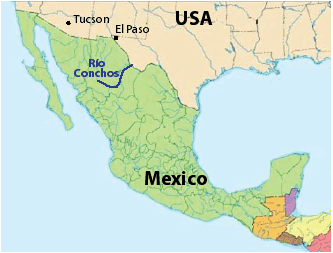
BENEFIT OF DOING BOTH MULATOS-AROS AND CONCHOS: Several folks on the Mulatos-Aros trip may be continuing to do the Conchos, in which case you can have a little more sightseeing in lieu of driving time. One of our vehicles would go directly over to the Conchos from Sahuaripa instead of returning to Douglas/Tucson. This will save approximately 4-8 hours drive time and allow a stop and possibly camp night at Cascada Basaseachi (7 hr drive from Sahuaripa). The next day you'd continue to the put-in for the Conchos (Bocabureachi Hot Springs; ~5 hr more drive) giving plenty of time to enjoy the hot springs. Also, you'll save $200 on the Conchos trip!

Total Conchos trip length [33 km AguaCaliente + 39 km Red Gorge + 94 km Ciriacos + 76 km Zaragoza = 242 km].

TENTATIVE ITINERARY:
Aug21: participants arrive in Douglas; stay night in hotel; ready to go next morning
Aug22: DAY 1: cross border in Douglas, get tourist visas; continue to Cuauhtémoc/hot springs
Aug23: DAY 2: Agua Caliente run (if water high enough); class II-III; ~15 km
Aug24: DAY 3: onto main Conchos; class III-IV; ~20 km
Aug25: DAY 4: into Red Gorges; one class V; class III; ~30 km
Aug26: DAY 5: Ciriacos; San Rafael; class III; ~40 km
Aug27: DAY 6: Ciriacos; class II-III; ~40 km
Aug28: DAY 7: end Cañon Ciriacos: class I-II; one optional class V; ~30 km
Aug29: DAY 8: Cañon de Zaragoza; class I-II; ~40 km
Aug30: DAY 9: end Cañon de Zaragoza; start drive back; class I-II; ~20 km
Aug31: DAY 10: back in Douglas

DAY 1: Early on DAY 1, our 12-passenger van (or possibly a pickup truck) will be in Douglas to pick up participants at their hotels. We will drive the van across the border, get our tourist visas, and proceed to Cuauhtémoc (total ~400 miles, 9 hr) where we'll stay in a hotel. We might make it to Bocabureachi Hot Springs to camp (~40 miles; 1.5 hr).

DAYS 2-9: On DAY 2 we intend to launch, but it is dependent on the water level of Río Carichi-Agua Caliente. We may have to start at a point downriver. Rio Agua Caliente is class III with one potential portage. Río Conchos is generally class III but there are a few tougher spots. We will be on the river from DAYS 2-9.

DAY 9: We plan to finish by midday at the highway crossing at Valle de Zaragoza where we'll meet our van and vehicles and start heading back to the border (DAY 8). We should make it there the following day (~400 miles; ~10 hr drive total). The van will likely be heading back to California.

DAY 10: We arrive back in Douglas. Flights should be out very late this day or preferably, the following day.


COST
The general price for this trip is XX, minus discounts (see below).

Trip price includes:
-Transportation from Douglas into Mexico to the river and back to Douglas
-All meals while on the river, including bowls, plates, and utensils
-Guides to arrange logistics, interact with locals, and help provide a safe outing
-Rafts to carry you and your camping gear down the river
-All kitchen and group camp items
-PFD, helmet, jacket, drybag
-Kayak, inflatable kayak, or raft (check with Rocky: planned boat availability list here)

Price does not include:
-Hotel stays on either end of the trip (doubles run ~$40/night in Tucson/Douglas)
-Mexican tourist visa [you will need a passport (~$20)]
-Food during travel to/from the river (bring at least $50 for these meals and incidentals)
-Beer/wine (we can purchase and carry a certain amount for you, but you pay more)
-Personal camping gear (tent, sleeping bag, ground pad, headlamp)
-Transportation back to Tucson from Douglas
-Tips (if you like our service and think it is reasonably priced, consider some gratuity)

Discounts: Subtract the following from the full normal price of the trip:
XX: for bringing your own kayak and gear ($20 off if you only bring drybag, PFD, helmet, skirt)
XX: if you also join the Mulatos-Aros trip
XX: if you supply your own raft, row it, and competently haul some of the group gear/passengers
XX: if you have a rugged vehicle and can shuttle yourself and some gear/folks (we provide shuttle driver)
- additional discounts may apply for services rendered, advertising, or for large groups

PRICES ARE SUBJECT TO CHANGE. In general, they are low because it is being run as part of the nonprofit, participants are expected to do chores, and the available selection of boats is limited. All excess revenue will go to SierraRios and its goal of promoting conservation of rivers in Mexico.

RESERVATIONS
If you are interested in this trip, send Rocky a note regarding yourself, your paddling experience, what boat you would want to use or bring, how you would arrive. Once approved, you should make a deposit ($500) in order to secure your spot on the trip. Full payment must be received before the trip starts. Full payment must be received before the trip. Deposits may be made preferably by sending a check (make out to James Contos, 5071 Constitution Rd., San Diego, CA 92117), transferring money via PayPal (as a "gift" to rocky@sierrarios.org), or making a credit card payment online. Final balances can be made via PayPal (as a "gift" to rocky@sierrarios.org) or in-person to Rocky with cash or check.

As of February, our group total stands at 1 (we can handle 10). You may make a deposit or pay a balance with the "donate" button below. ($400 deposit for each person; when paying remaining balances, specify discounts that apply); be sure to send Rocky a message with a little info about you and your group.

CANCELLATIONS

We reserve the right to cancel the trip at any time. In particular, the trip may not be feasible to run if there are too few paying individuals. If we cancel the trip, all deposits and payments will be refunded.

If you must cancel the trip, you'll probably get your money back, but we reserve the right to keep a percentage of your deposit according to the following guidelines:
5% if you cancel >40 days before the trip
50% if you cancel 20-40 days before the trip
100% if you cancel <20 days before of the trip

YOUR GUIDES:
(1) Rocky Contos, the trip leader, has explored nearly every river in Mexico including ~200 first descents covering ~8,000 km of river and ~55,000 m of drop, solo kayaked the entire upper Conchos in 2001 and the Carichi-Agua Caliente run in 2008, led multiple raft descents on rivers in Mexico between 2000 and 2012, wrote the guidebook to the Sierra Madre Occidental, and is preparing guidebooks to the rest of the country. He is fluent in Spanish and has paddled over 150 multi-day journeys on rivers, with dozens in the range of 5-22 days. Several articles have featured Rocky (American Whitewater; Kayak Session; Canoe & Kayak). While attaining his Ph.D. in neuroscience, Rocky worked as a kayak instructor and guide for UCSD's Outback adventures from 1993-1996 and gained valuable trip planning skills for large groups. Although primarily a kayaker, Rocky started rafting in the mid-1990s in order to introduce more people to the wonders of river travel. Since then and throughout his years as a postdoctoral research associate, he has organized numerous large group raft and kayak expeditions, including five through Grand Canyon (18-22 days), three on the Salmon River (4-10 days each), and dozens to destinations such as the Salt, Kern, Rogue, Deschutes, John Day, Thompson, Similkameen, and Baja California (2-6 days each). Rocky founded SierraRios with the goal of conserving the rivers of Mexico, and hopes that increased awareness and enjoyment of the resource will lead to protection. He is organizing all aspects of the trip, including logistics and meals. He likely will be rowing a large cataraft or self-bailer raft with gear and passengers, but may safety kayak if a competent rower is availlable.

(2) German Arroyo will join the trip with a 14' raft. German lives in Mexico City, has been a raft guide for many years, rafted the Aros in 2011, and participated in one of the recent SierraRios Usumacinta trips.


RENDEZVOUS POINTS
DOUGLAS: At this point, we plan to drive the SierraRios van (or maybe a pickup) from the Sahuaripa take-out of the Mulatos-Aros trip up to Douglas and then down to Cuauhtémoc. After the Conchos trip, the van is expected to return to Douglas, then Tucson, and from there probably to California. If you have a vehicle and can drive, we may wish to have you pick up folks and bring them down and then back - you'd get a discount off the price of the trip.

PARKING IN DOUGLAS: If you drive to Douglas and want us to pick you up, you may have to leave your vehicle in a parking lot (you are responsible for this fee). You should check with a hotel you may stay at since many allow parking for a week with a 1 night stay.

FLYING TO TUCSON: If you are planning to fly to Tucson, remember that bringing your own boats and gear on a plane can sometimes be frustrating. Southwest Airlines is one of the most accommodating airlines that has always accepted whitewater kayaks in the past. They do charge an oversize fee ($50 each way; <11 ft and <50 lbs) but at least they can take them. Other airlines have varying policies. Alaska an US Air take kayaks ($50-75 extra each way), but United and Delta may not. If it all sounds too daunting to you, consider using one of our kayaks (if we have one available that you like). If you fly to Tucson for this Conchos trip, you should expect to pay $35 for transport to Douglas. It might be possible for one of the participants driving down to pick you up and bring you to Douglas (you should compensate them $25/person).

FOOD

We will organize the food and bring the kitchen (tables, pots, plates, bowls, utensils, and stoves). You can expect to eat to your tummy’s content - as much as you can handle. If you have specific food restrictions/preferences let us know and we will try to accommodate you. There will always be vegetarian options. If Rocky plans the food, it will generally consist of the following:

Breakfast: usually there is a range of foods to choose from: coffee, tea, fruit, cereals, milk, tortillas, and perhaps something special such as eggs/omelettes, pancakes, or french toast. If you have specific preferences, let Rocky know and he will accommodate. There will also be drink mixes available, such as Gatorade, iced tea mix, or lemonade.

Lunch: Items typically available are trail mix, dried fruits, energy bars, chips, cookies, and sandwiches. Sandwiches can vary: early in trip maybe ham/turkey, cheese, avocados, tomatoes, lettuce, mustard, mayo; later maybe tunafish; always PB&J). There may be wraps or pita/hummus type food one day. We will have many dates available (produced in the nearby desert).

Dinner: Rocky’s dinner menu will include selections from the following types of food:
Mexican (tamales, chile rellenos, tacos along with beans/tortillas/guacamole/chips/salsa; maybe tortilla soup)
Italian (pasta with marinara, pesto, or alfredo sauce, salad; sauteed squash/chorizo/meat/parmesan cheese)
Indian (Tasty Bites, curried lentils, couscous or rice)
American (turkey, steak, and/or salmon; mashed potatos, sweet potatos, corn, gravy)
Asian (rice either stir-fry veggies/meats or curries; flavors: teriyaki, panang/red curry, or Schezuan)
Greek (pita/rice pilaf, falafel, dolmas, olives, feta, Greek salad, maybe dill salmon or gyros)
Meat will always be prepared separate. The meal plan will be sent out about a week before the trip.

Desserts: There will always be some form of sweet to eat – cookies, chocolates, flan, etc.

ALCOHOL
Alcoholic beverages are not included in the price of the trip. If you would like some, you can let Rocky know how much and he will buy and pack it ($2/beer or $10-15 per bottle wine; limits apply). You can bring your own and we’ll pack it, but a carriage donation of $1/beer and $5 per bottle of wine applies). There is a limit to the amount we will carry for you, which depends on the amount of space we have available on the rafts and the amount of alcohol requested. DO NOT pack beer cans in your drybag because the cans often burst! Wine and hard liquor should be packaged into plastic containers or lightweight metal bottles beforehand - for example, you can get a 1.5L water bottle from a supermarket, empty the water, and fill it with 2 bottles of wine. Don’t expect ice-cold beer all the time – we will have cold coolers only the first few days.

WATER
We will bring filters and treatment products and provide safe drinking water on the entire expedition. The river generally runs with a lot of silt and takes more effort to convert to clear drinking water than many of the clear side arroyos. The arroyos with little or no habitation contain pristine water that is usually safe to drink straight from the creekbed. To be safe, we will treat water either with hypochlorite, iodine, filters, or boiling before drinking. Water will be transported in two 5-gallon containers and some collapsable containers with spigots. You should have your own water bottle

CHORES
Si
erraRios trips are designed to be participatory in nature, and therefore participants are expected to help with camp duties including loading/unloading rafts, camp set-up, food preparation, washing dishes, fire duties, and burning trash. We generally have a rotating schedule. Duties can be swapped with others, as long as someone is there and you end up contributing equally in the end. Everyone is expected to help load/unload the rafts each day and rig/de-rig at the start/end of the trip. A few individuals may be designated to help with specific camp set-up chores. Two individuals will be assigned to help with food preparation and two others to wash dishes each morning and evening. After washing and rinsing, dishes are sterilized in a dilute bleach solution. If you are assigned to help with the food, please make sure you wash your hands and keep them clean. We will make sure the camp is left just as we found it or better. SierraRios trips practice leave-no-trace as much as possible. We do not leave ashes or trash at any camp and try to clean up trash we find. Those who pay their deposits early have the advantage of signing up for the chores they prefer. If you have no preference for chores, let Rocky know a few things about you so he can assign appropriate ones:

-Do you really enjoy preparing food or specific things like pancakes?
-Are you more of a night-owl or a morning person?
-Do you have pyromaniac tendencies?
-Are you willing to set-up/deal with a groover station?
-Do you prefer to wash dishes?

Duty list:
Kitchen set-up: Day 1; 2; 3; 4; 5; 6; 7; 8

Kitchen pack-up: Day 2; 3; 4; 5; 6; 7; 8; 9

Oar tri-pod set-up (for lantern): Day 2; 3; 4; 5; 6; 7; 8

Groover set-up/take-down: Day 2; 3; 4; 5; 6; 7; 8

Dishes: 2 individuals each time: Day 1b; 2a; 2b; 3a; 3b; 4a; 4b; 5a; 5b; 6a; 6b; 7a; 7b; 8a
Food prep: 2 individuals each time: Day 1b; 2a; 2b; 3a; 3b; 4a; 4b; 5a; 5b; 6a; 6b; 7a; 7b; 8a

Fire and Trash/TP burn: Day 2; 3; 4; 5; 6; 7; 8

.

TOILET AND BATHING
For bathing, the river and side streams will be quite warm on the trip. You can bath directly in the river using biodegradable soap. We may also have a solar shower, which may be preferable as the soap goes into the dirt and decomposes there instead of in the river. Please wash and bath with a minimal amount of soap/shampoo and try not to leave foamy residues for others in the camp to find.

Toilet: Urinating should be done directly into the river or away from camp and out of sight of others. We generally will bring a toilet system to carry solid human waste out of the canyon. With this method, at each camp we will set up a groover box with a toilet seat and lid. Someone in charge of this will set up, take down, and clean up if need be. TP and a TP bag will be by the groover. TP should be placed in the bag for later burning. A paddle across the path to the groover indicates the spot is occupied; an upright paddle indicates it is not. There will be a washing station by the toilet to wash and sterilize your hands after use. Always clean your hands before handling any food!

Alternate toilet method: On rivers with few or no visitors, we may use a designated latrine instead of a groover. The latrine will be excavated away from the camp. Again, a paddle across the path indicates the spot is occupied; an upright paddle indicates it is not. TP and a TP bag will be by the latrine. TP should be placed in the bag for later burning. A wash station will be nearby - always wash your hands afterward. The latrine will be covered with dirt in the morning before we take off on the river.

If you think the latrine disgusting, you may also find your own place to away from camp to somewhere above the high-water line, dig a hole 4-6” deep, and cover your feces. A kayak paddle can come in handy in this regard. Carry your TP back and put in the TP trash bag or burn it at the spot and bury the ashes with the feces.


SAFETY
The violence in Mexico surrounding the drug was has been in the news a lot in the past three years. The violence is generally confined to drug traffickers (narcos) and those associated with them, including law enforcement. In addition, the river we will be journeying down does not have any marijuana cultivation visible near it. As such, we are not likely to be harassed or molested in any way related to the drug war.
For further discussion of the drug war and safety concerns, click here.

Independent of the drug war, there has always been potential danger for assault in Mexico by armed bandits (bandidos). This is the same now as it was 5 , 10, or 20 years ago. Such risk is common in any third world country where citizens are very poor. In the event of assault, we will do all we can to protect our clients and ourselves, but may have to sacrifice our possessions. Because we can never guarantee against such assault, you must agree not to hold us liable for consequent personal injury/damage/loss you sustain on this outing.

The other aspect of safety is prevention of accidents. It is of utmost importance that you take all precautions necessary to avert injury, sickness, and complications while on the trip. As guides, we are there to help get you safely to the river, down it, and back out, but cannot guarantee against accidents. You must accept the responsibility for what happens on the river if you are in control of your craft. If you are concerned about the whitewater or other aspects, it is your responsibility to make appropriate decisions whether to run the rapid or not and to stay close to someone who can watch and oversee you (if you desire that level of protection). If an accident occurs, we will do all in our power to help you, see that proper care is rendered, or evacuate you if need be. Rocky is trained as Wilderness First Responder and will administer appropriate emergency medical care if needed. We will have two basic first aid kits available. We will also carry a satellite phone for emergencies and changes of plan.

GENERAL ROUTINE
Most days we will launch around 10 am, stop for lunch around noon, and be at camp around 4-5 pm. There may be an interesting hike we'll allow time for in the morning, lunch, or after landing. At this time of year (Aug-Sep), days are still fairly long, with sunrise-sunset from 6 am-7 pm. We'll usually be making around 30-40 km/day when on the water. After landing, we'll set up camp and get dinner started. If it happens to be cool, we may collect firewood for a campfire. Most activity will concentrate around the eating area and campfire. You will be free to relax, wander, or socialize. After eating, those in charge of the dishes will clean them all. Each evening during dinner or afterward we will have a group meeting to discuss the day's events, what is coming up the following day, and any other issues that should be addressed (such as who will be in what boat, etc.). In the morning, you must have your tent and camp area packed up and ready to go before we start loading the rafts. Some mornings will have potential hikes. We hope to have one layover day where we remain in the same camp for two nights. That day you can just hang out and lounge if you like, enjoy the water, or go on an exploratory hike. SierraRios trips practice leave-no-trace as much as possible. No ashes or trash are left at any camps.


WATER LEVELS
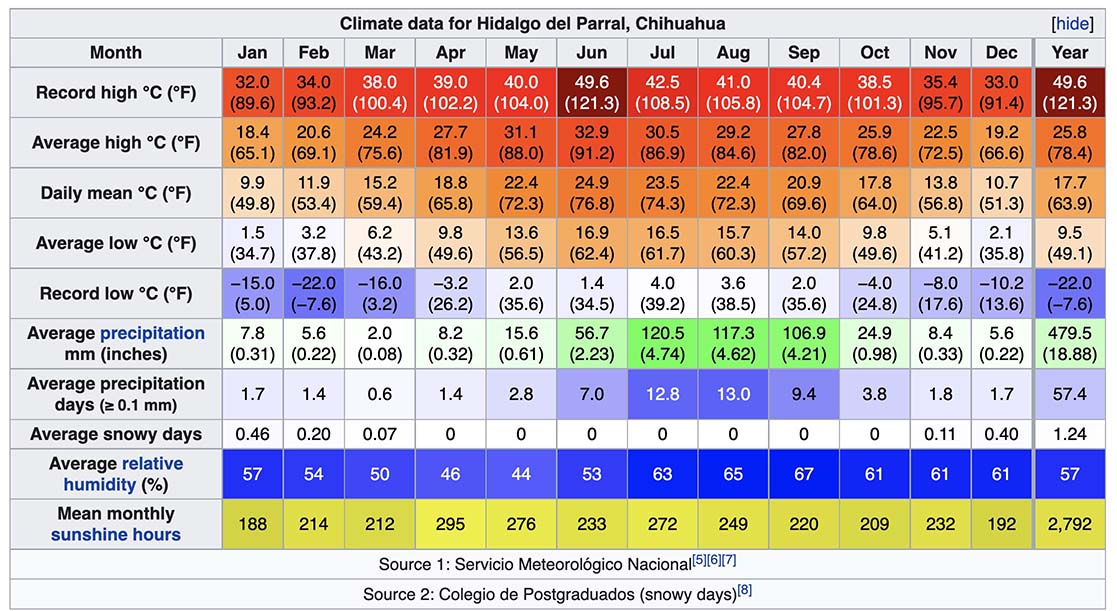
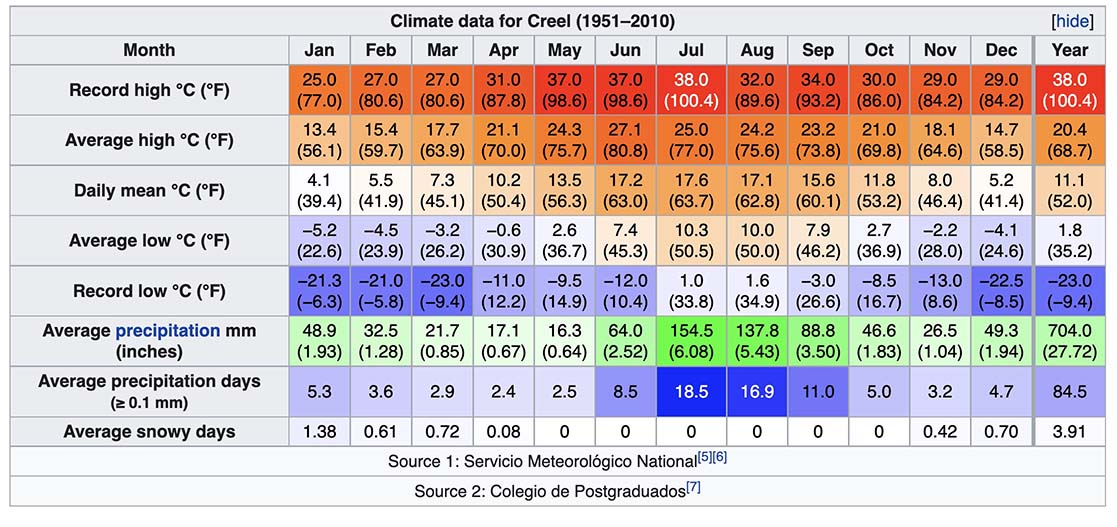
We have timed this trip to coincide with highest probability of good river flows. In September, flows average 50 cms (1700 cfs) on the Conchos in the Red Gorges and 70 cms (2400 cfs) in Cañon Ciriacos. It is very likely (~80% chance) that we will have 20-200 cms (700-6000 cfs) during our trip, but there are slim chances it will be higher (10%) or lower (10%). If water levels are normal or high, we can start our journey with smaller boats on Río Agua Caliente at Bocabureachi Hot Springs. If they are on the low side, we all will go to Puente Baqueachi and start there for the Red Gorges section. If levels are extremely low, we will all go to Puente Agua Caliente (Nonoava) and start there for Cañon Ciriacos. Water levels can fluctuate rapidly due to spotty intense thunderstorms that are characteristic of the monsoon season in the region. It is important that rafts be tied up well so they don’t drift away in a rising tide on the river. Equally important, the camp must be set at a high enough location so it will not be flooded. We may encounter rapidly rising river that reaches camp (usually in the evening). If this happens and you are the first to notice, please wake the guides first, and we will assess the situation. It may be necessary to move camp higher.

WHAT TO PACK:
You will need to pack appropriately for spending 8 days out in the Mexican wilderness. Although it will generally be quite hot, it can get cool at nights and during thunderstorms. Come prepared for both. Your camp gear will be transported down the river in one large drybag. You should bring an additional small drybag for day-accessed items; this will go in your kayak or (if a rafter) on the raft. We can provide these, but it is probably better to get your own and see how all your gear packs into it beforehand. The best size for your one large drybag is about 3800-4600 cu.in (such as Bill's 2.2 DryBag or the NRS Duffel). Do not pack excessively. These sizes are large enough to fit a 2-person tent, Therm-a-rest chair, light sleeping bag, 2 changes clothes, dry shoes, toiletries, headlamp, reading material, with a little extra space. There are larger drybags out there (e.g., 3.8 cu.ft/6000+cu.in/100+L) but if you bring one this size, you should expect it not not be full – rather, it should be very easy to close and your additional small drybag should fit inside. It is in your best interest not to overpack your drybag because it often causes lack of proper sealing and consequent leaking if dunked. We will check the size of your personal gear before the trip starts. If you have excessive load, you may need to leave some items. There may be 1-2 Paco Pad foam mattresses available (7 ft long/2 in. thick sleeping pad you can put under your tent) for certain individuals to use. If you would like to use one in lieu of bringing your own Therm-a-rest or equivalent, send a note to Rocky. Preference may be given to those with back problems.

River items to bring:
-Shorts, shirt
-Paddle jacket (we may be able to provide one if you don’t have)
-Water shoes (preferably multipurpose for wear on the river and hiking)
-PFD (if you don't have one, we will provide)
-Kayak gear (only if kayaking: helmet, skirt)
-Hat and sunglasses (with retainer)
-Small drybag for your kayak or on raft (for passengers)
-Large drybag for camp gear (if it is a very large bag (>3 ft3), your small drybag must fit within)
-Water bottle (preferably with a carabiner to clip onto a raft)
-Sunscreen

Camp items to bring:
-Tent (a 2-person tent can be used by an individual)
-Sleeping bag (consider using your fleece or other item as a pillow)
-Therm-a-rest (chair and bed; we may have a few chairs for the camp)
-Basic clothing (t-shirt, shorts, light pants, light long-sleeve shirt, fleece, underwear)
-Camp shoes (these can be the same as your river shoes or a different dry shoe)
-Headlamp (plus extra set of batteries)
-Toiletries (toothbrush, toothpaste, floss, lotions, etc)
-Special medicines/lotions (anti-fungal cream, bug repellent)
-Lighter/matches (remember to check it if flying)
-Pocket-knife (remember to check it if flying)
-Mug (for your hot beverages; we'll have plastic cups for water/wine/etc)
-Reading material
-Bug repellent (very important for comfortable hanging-out in camp)

KAYAKS, IKs, and RAFTS AVAILABLE FOR THIS TRIP

(many of these are big comfy boats; the Jive is great for surf/play):
Prijon Rockit

Necky Jive
Wavesport Extreme
Perception Corsica
Jackson Mega Rocker
Liquid Logic Gus

NRS Bandit II (Inflatable Kayak)
Tributary Tomcat Tandem (Inflatable Kayak)

16' NRS cataraft - Rocky's
16' Rocky Mountain (with frame) - Rocky's

.A FEW COMMENTS FROM PAST PARTICIPANTS:


"Hi Rocky, Thanks again for a sensational and unforgettable trip. You did such an amazing job organizing. I especially am psyched to have met you and to have another kayak friend/guide to work with. You guiding me off the waterfall was a big highlight... Erik."
[2011b Usumacinta trip]
Erik Weihenmayer, blind mountaineer/author and budding kayaker (see www.TouchTheTop.com )


"You led one of the best trips I've ever been on... and I've been on a lot. " [2011b Usumacinta trip]
Chris Wiegand, former olympic runner and C1 paddler, founder of Sportainability and guide for Erik Weihenmayer


"Thanks for everything man, it was a trip of a lifetime ... We´ll be in touch and I look forward to conquering new rivers in the future. Salud, Eric" [2011b Usumacinta trip]
Eric Bach, Modern Gypsy (see www.TheModernGypsies.com)


"Hey Rocky, Thanks for the great trip... Looking forward to another trip down the road. John"
[2011b Usumacinta trip]
John Post, Modern Gypsy (see www.TheModernGypsies.com)


"Great synopsis of a fabulous trip. Expect to hear more from Team Weihenmayer in the future... Cheers, Rob. " [2011b Usumacinta trip]
Rob Raker, climber extraordinaire and guide for Erik Weihenmayer (also see here)


"Thanks again for the great tour and the late-night excitement, Greg" [2011a Usumacinta trip]
Greg Scwhendinger, kayak explorer of Chiapas and Central America (see www.MayanWhitewater.com)

"Thanks for everything, Rocky! What a blast that all was.  When's our next trip?!! -Suzy" [2011b Usumacinta trip]
Suzy Garren (Oakland, CA), former Grand Canyon trip participant.


"THE TRIP KICKED MAJOR ASS! mike"
[2011 Mulatos-Aros trip]
M
ike Doktor (Portland, OR), former raft guide for Ken Warren Expeditions